Sliding Gate Motor Installation: 7 Costly Mistakes to Avoid in Johannesburg

Installing a sliding gate motor can improve daily convenience, property security, and access control. However, the quality of the installation matters as much as the motor itself.
A motor that is incorrectly sized, poorly aligned, or installed on a damaged gate can lead to repeated breakdowns and unexpected costs. Johannesburg properties also face practical concerns such as load shedding, dust, uneven ground, heavy gates, and high daily usage.
The following seven mistakes can affect performance, safety, and the long-term value of your investment.
For professional advice, contact Forgegate for a tailored assessment and transparent quotation.
1. CHOOSING A MOTOR THAT IS TOO SMALL
One of the most expensive installation mistakes is selecting a motor based only on price.
Sliding gate motors are designed for specific gate weights, lengths, and operating cycles. A light residential motor may not be suitable for a heavy steel gate, a long driveway gate, or a property where the gate opens and closes many times each day.
An undersized motor may:
- Struggle to move the gate smoothly
- Overheat during repeated operation
- Wear out its gears and internal components
- Drain the backup battery quickly
- Fail prematurely and require replacement
The gate’s weight is not the only consideration. The condition of the track, wheels, rack, and gate frame also affects the load placed on the motor.
A professional installer should assess the full system before recommending a motor. This includes the gate’s approximate weight, length, operating frequency, slope, and available power supply.
Established brands such as Centurion, ET Systems, and Gemini offer different motor ranges for light, medium, and heavy-duty applications. The correct choice should be based on your requirements rather than a standard product package.
2. IGNORING THE CONDITION OF THE GATE AND TRACK
A new motor cannot correct a gate that is stiff, damaged, or incorrectly aligned.
Before automation begins, the gate should move freely by hand. If it catches, drags, shakes, or becomes difficult to move, the motor will have to work harder than intended. This increases stress on the motor and can cause inconsistent operation.
Common problems include:
- Damaged or uneven sliding tracks
- Worn gate wheels or bearings
- Rusted gate frames
- Loose guide rollers
- Incorrectly positioned gate stops
- Sinking or cracked concrete foundations
- Dirt, stones, and debris in the track
These issues should be repaired before the motor is fitted. In some cases, the correct solution may involve replacing wheels, repairing the track, reinforcing the gate, or improving drainage around the foundation.
A professional site assessment helps identify these problems early. This reduces the risk of paying for a new motor only to discover that additional repair work is required later.
3. ACCEPTING THE CHEAPEST INSTALLATION QUOTE
A low quote may appear attractive, but it does not always represent good value.
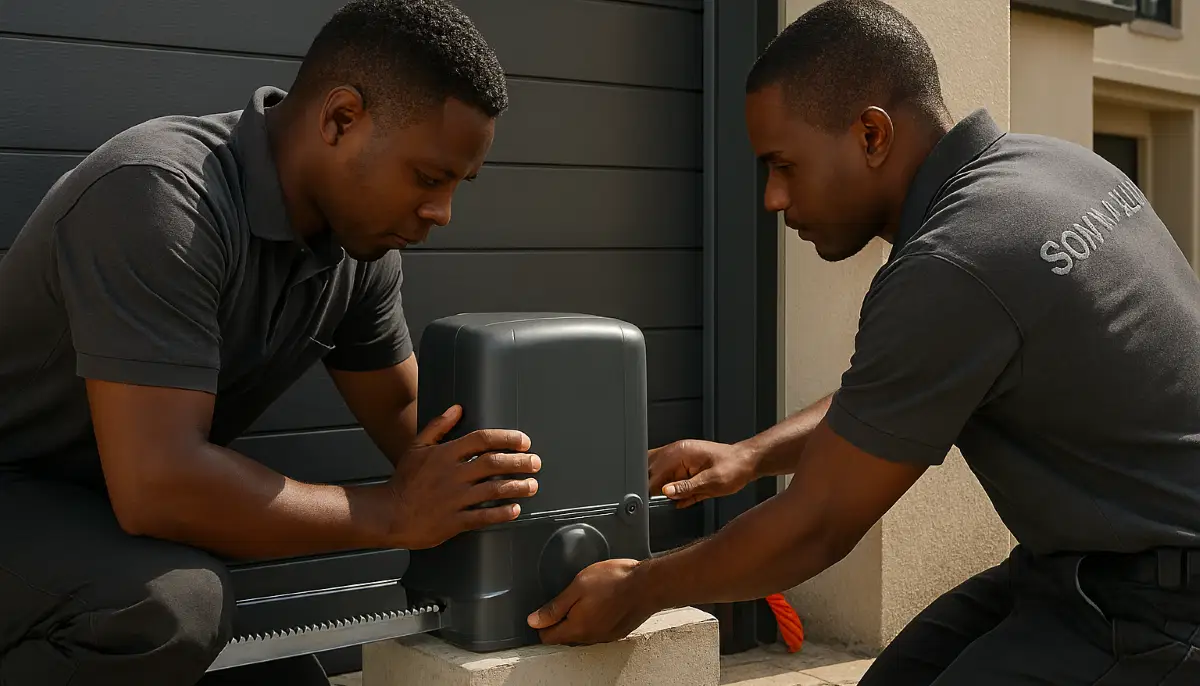
Gate motor installation requires accurate positioning, secure mounting, correct rack alignment, reliable electrical connections, and careful programming. Poor workmanship can result in noise, jerky movement, unreliable limit settings, and premature component failure.
When comparing Johannesburg installation quotes, confirm whether the price includes:
- The motor and mounting base
- Rack supply and installation
- Battery backup
- Remote controls and programming
- Electrical cabling and connections
- Safety devices where required
- Manual release instruction
- Testing and commissioning
- Workmanship warranty
- Call-out or additional site fees
The installer should also conduct a site visit before providing a final quotation. A remote estimate may not account for slopes, long cable runs, damaged infrastructure, access restrictions, or unusual gate dimensions.
Forgegate provides professional gate motor repairs and automation services for residential, commercial, and industrial clients. Our approach focuses on reliable installation, quality workmanship, and solutions tailored to the property.
4. FAILING TO PLAN FOR POWER OUTAGES
Load shedding and local power interruptions make battery backup an important part of gate automation in Johannesburg.
Without a functioning backup battery, your gate may stop operating during an outage. This can leave a property unsecured, prevent residents from entering or leaving, or disrupt access to a business premises.
A suitable backup system should be considered during the initial installation. The correct battery capacity depends on:
- The gate’s weight
- The number of daily operating cycles
- The expected outage duration
- The motor model
- Additional devices connected to the system
It is also important to understand the manual release mechanism. Every person who may need to operate the gate should know how to disengage the motor safely if the battery is flat or the system experiences a fault.
Battery condition should be checked during routine servicing. Batteries do not last indefinitely, and a failing battery can cause slow operation, incomplete opening, or unreliable performance even when mains power is available.
5. UNDERCOUNTING THE TOTAL INSTALLATION COST
The motor is only one part of a complete sliding gate automation system.
Some quotations cover the motor and labour but exclude work required to make the system operational. These additional costs can significantly affect the final budget.
Potential items include:
- Replacement or extension of gate rack
- New concrete mounting base
- Track and wheel repairs
- Electrical cabling to the gate
- Trenching and conduit
- Extra remote controls
- Safety beams
- Intercom or access control integration
- Gate stops and guide rollers
- Battery upgrades
- Removal of an old motor
Indicative South African installation pricing commonly varies according to the motor brand, gate size, site conditions, and installation complexity. Published industry guides place many residential sliding gate motor installations in the broad range of approximately R7,000 to R12,000, while heavier-duty or integrated systems may cost more.
These figures should be used for general planning only. A written, itemised quotation is the best way to understand the actual cost of your project.
Ask the installer to separate equipment, preparation work, electrical work, labour, and optional upgrades. This makes it easier to compare quotations accurately and reduces the risk of unexpected charges.
6. SKIPPING SAFETY FEATURES AND SYSTEM TESTING
A sliding gate is heavy moving equipment. Safety should be included in the design and commissioning process.
Depending on the property and system configuration, appropriate safety measures may include:
- Safety beams or photoelectric sensors
- Obstacle detection
- Correct gate stops
- Secure manual release access
- Anti-lift protection
- Warning signage where appropriate
- Controlled closing speed
- Reliable remote control programming
The installer should test the gate several times after installation. Testing should cover opening, closing, stopping, obstruction response, battery operation, manual release, and remote controls.
Residents, staff, and other authorised users should also receive clear operating instructions. This is particularly important for businesses, body corporates, rental properties, and sites with multiple users.
Safety features should not be treated as unnecessary extras. They support controlled operation, help reduce avoidable damage, and provide greater confidence for people, vehicles, and visitors using the entrance.

7. NOT PLANNING FOR MAINTENANCE
A gate motor requires ongoing care to maintain reliable performance.
Johannesburg conditions can expose gate systems to dust, dirt, rain, temperature changes, and regular daily use. Without maintenance, small problems can develop into major repairs.
A practical maintenance plan should include:
- Cleaning the sliding track
- Inspecting gate wheels and guide rollers
- Checking rack and pinion alignment
- Testing the battery
- Inspecting cables and connections
- Checking gate stops
- Confirming correct limit settings
- Testing safety beams and obstacle detection
- Tightening loose fasteners
- Reviewing remote controls and access devices
The gate should not be forced when it becomes difficult to move. Resistance, grinding, delayed movement, or repeated stopping may indicate a mechanical or electrical problem. Early attention can help reduce downtime and protect the motor from additional strain.
Forgegate provides gate motor repair, servicing, and automation solutions focused on dependable operation and long-term performance. Regular professional servicing can help identify wear before it results in a complete system failure.
WHAT TO CHECK BEFORE APPROVING INSTALLATION
Before work begins, confirm that your installer has assessed:
- Gate weight and operating frequency
- Track, wheels, and guide rollers
- Gate stops and alignment
- Motor capacity
- Battery backup requirements
- Electrical supply and cable route
- Safety features
- Manual release operation
- Access control requirements
- Warranty and after-sale support
A reliable installer should explain the recommended solution clearly. You should know what is included, what may cost extra, and how the system will be maintained after installation.
CHOOSE PROFESSIONAL GATE AUTOMATION IN JOHANNESBURG
The right sliding gate motor can provide smooth access, improved security, and dependable performance for years. However, the result depends on correct motor selection, proper gate preparation, professional installation, and ongoing servicing.
Avoiding these seven mistakes helps reduce unnecessary costs:
- Choosing a motor that is too small
- Ignoring the gate and track condition
- Accepting the cheapest quote without comparing specifications
- Failing to plan for power outages
- Undercounting additional installation costs
- Skipping safety features and system testing
- Neglecting regular maintenance
Forgegate delivers professional installations, repairs, automation upgrades, system optimisation, and after-sale support for clients across Gauteng. Our team applies integrity, vigilance, and skilled workmanship to every project.
Learn more about Forgegate or request a professional quotation for your sliding gate motor installation.
Need reliable gate automation? Call Forgegate on 072 733 1288 for professional guidance and a transparent quote.